
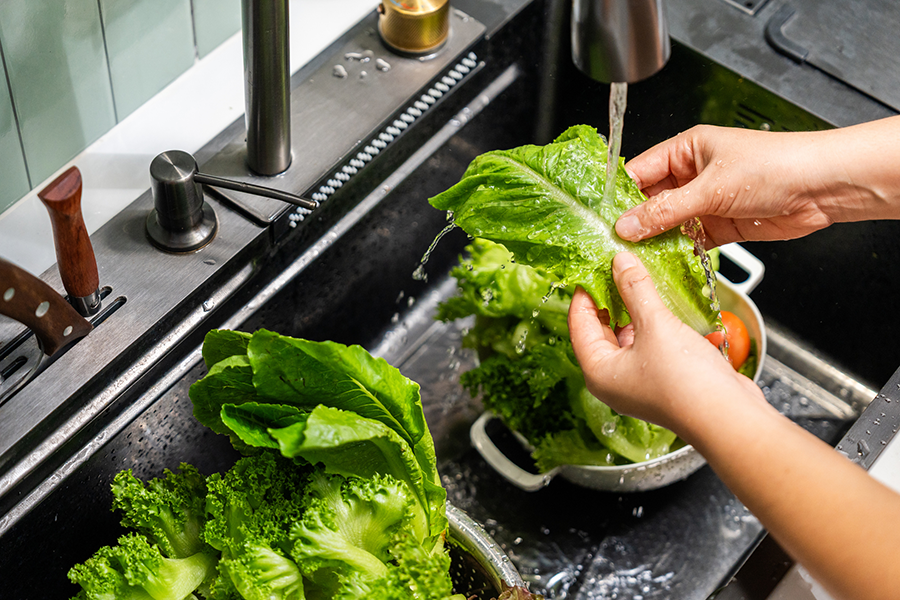
Food poisoning can happen to anyone. Each year, an estimated 48 million people in the United States get sick from a foodborne illness. About 128,000 are hospitalized, and 3,000 die, according to the Centers for Disease Control and Prevention (CDC). Foodborne illness can happen when food becomes contaminated with bacteria, viruses, parasites, toxins, or other harmful substances. Contamination can occur at many points—from growing and processing food to preparing it in a restaurant or your own kitchen. A recent outbreak of cyclosporiasis linked to iceberg lettuce is a reminder that even foods we often eat raw can carry harmful germs or parasites.
What the 2026 Cyclospora outbreak can teach us
In summer 2026, the U.S. Food and Drug Administration (FDA), CDC, and state and local health officials began investigating a multistate cyclosporiasis outbreak linked to shredded iceberg lettuce.
The investigation traced the lettuce to Taylor Farms in Mexico. Some of the lettuce was served at Taco Bell restaurants, while recalled products were also distributed to other food-service customers and retailers across several states, including Arkansas.
Cyclospora is a microscopic parasite that can cause an intestinal illness called cyclosporiasis. People can become infected by eating food or drinking water contaminated with the parasite.
Symptoms usually begin about a week after infection, but can appear anywhere from a few days to two weeks or more after exposure. Watery diarrhea is the most common symptom. Other symptoms may include:
- Loss of appetite
- Weight loss
- Stomach cramps
- Bloating and increased gas
- Nausea
- Fatigue
- Vomiting
- Body aches
- Headache
- Low-grade fever
Without treatment, symptoms can last for weeks and may seem to disappear before returning.
If you think you may have cyclosporiasis, contact your health care provider. Diagnosing the illness may require specific testing for Cyclospora.
The outbreak also illustrates an important point about food safety: You cannot always see, smell, or taste contamination. That's why following safe food-handling practices every day is so important.
Symptoms of food poisoning
Food poisoning symptoms depend on the germ or contaminant involved. Common symptoms include diarrhea, stomach pain or cramps, nausea, vomiting, and fever. 
Some illnesses begin within hours of eating contaminated food. Others can take days or even weeks to appear. That means the food that made you sick may not be the last thing you ate.
Most foodborne illnesses are mild, but some can become serious. Contact a health care provider if you experience:
- Bloody diarrhea
- Diarrhea lasting more than three days
- Fever above 102°F
- Vomiting so often that you cannot keep liquids down
- Signs of dehydration, such as little urination, dry mouth or throat, or dizziness when standing
Some people are more likely to become seriously ill from contaminated food, including adults 65 and older, children younger than 5, pregnant women, and people with weakened immune systems.
Follow these four food safety steps
Many cases of food poisoning can be prevented by following four basic steps: Clean, Separate, Cook, and Chill. 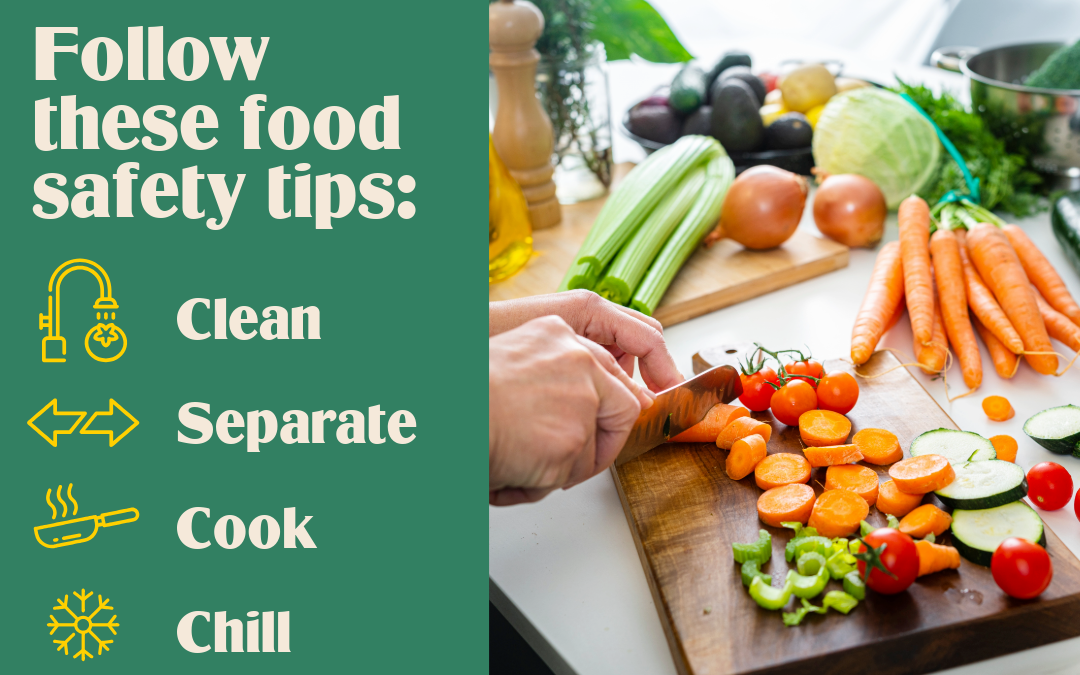
1. Clean
Wash your hands with soap and water before, during, and after preparing food. Clean utensils, cutting boards, and countertops after preparing each food item.
Rinse fresh fruits and vegetables under running water before eating, cutting, or cooking them. Do not wash raw chicken or other poultry, as splashing water can spread germs throughout your kitchen.
2. Separate
Keep raw meat, poultry, seafood, and eggs away from ready-to-eat foods. Separate these foods in your grocery cart, shopping bags, and refrigerator. Store raw meat in containers or sealed bags that prevent juices from dripping onto other foods.
Use separate cutting boards and plates for raw meat and ready-to-eat foods when possible. Never put cooked food back onto a plate or surface that previously held raw meat unless it has been thoroughly washed.
3. Cook
Cooking food to the proper internal temperature helps kill harmful germs. Don't rely on color, texture, or appearance to decide whether food is safe. Use a food thermometer.
Safe minimum internal temperatures include:
- 165°F: Poultry, including chicken and turkey
- 160°F: Ground meats such as beef and pork
- 145°F: Whole cuts of beef, pork, veal, and lamb, followed by a three-minute rest
- 165°F: Leftovers and casseroles
A food thermometer is an inexpensive tool that can make it much easier to know when food is safely cooked.
4. Chill
Refrigerate perishable foods within two hours. If food is exposed to temperatures above 90°F—such as at a picnic, cookout, or in a hot car—refrigerate it within one hour. Keep your refrigerator at 40°F or below and your freezer at 0°F or below.
Don't thaw frozen food on the kitchen counter. Instead, thaw it safely in the refrigerator, in cold water, or in the microwave.
Know how long leftovers are safe
Keeping food cold slows the growth of harmful germs, but refrigerated food doesn't stay safe forever.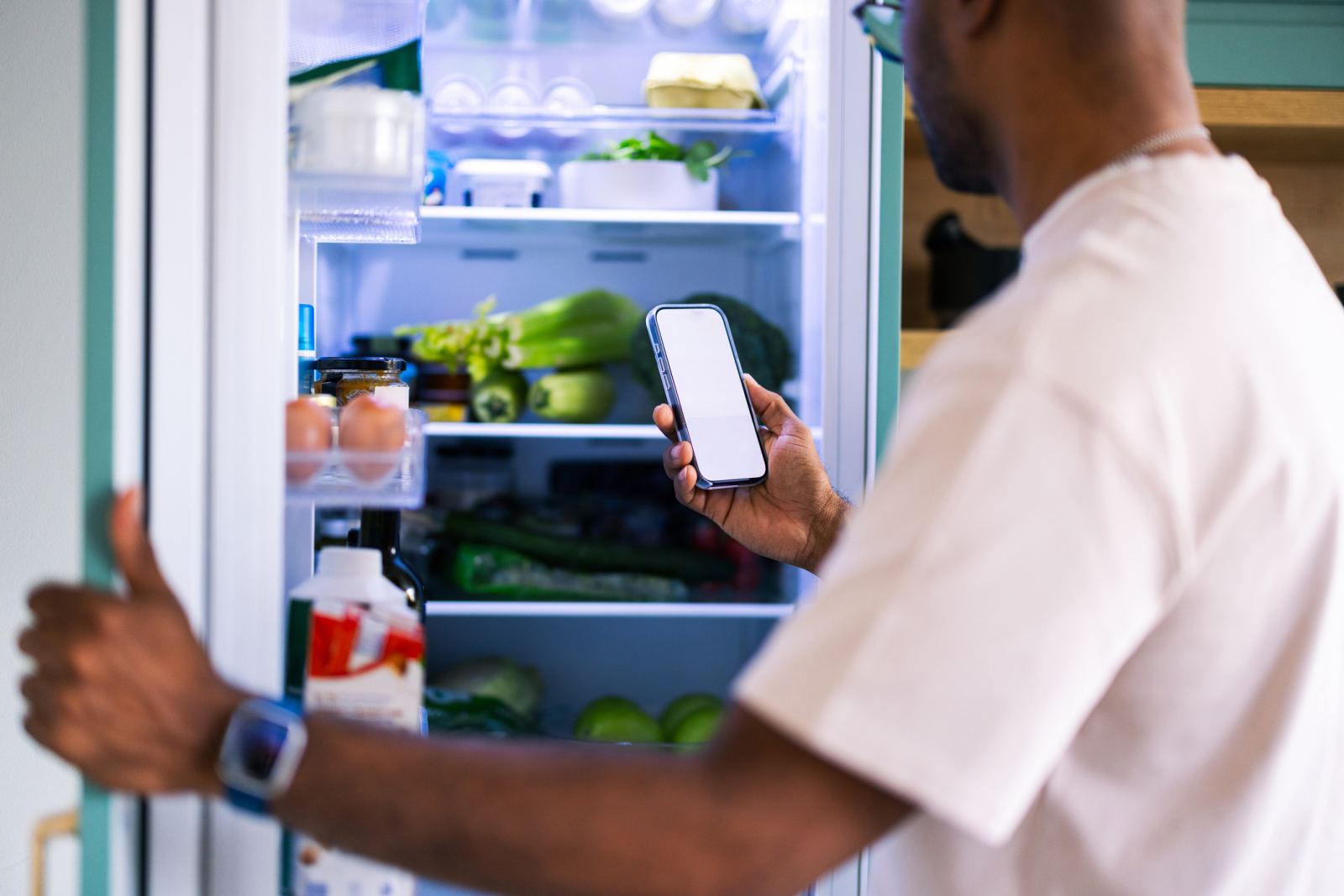
General refrigerator-storage guidelines include:
- 1–2 days: Raw ground meats, raw sausage, and raw poultry
- 3–4 days: Cooked leftovers, soups and stews, pizza, and egg, chicken, ham, tuna, and macaroni salads
- 3–5 days: Fresh steaks, chops, and roasts; opened or deli-sliced lunch meat
- 1 week: Opened hot dogs and bacon
If you won't eat refrigerated food within its recommended storage time, freeze it. Food kept continuously frozen at 0°F or below can remain safe indefinitely, although its quality may decline over time. When in doubt, throw it out.
Know some common causes of foodborne illness
More than one type of germ can cause food poisoning, and different germs are associated with different foods and symptoms.
Norovirus is the leading cause of foodborne illness in the United States. It commonly causes diarrhea, vomiting, nausea, and stomach pain, and can spread easily through contaminated food, surfaces, or contact with an infected person.
Salmonella can cause diarrhea, fever, and stomach cramps. Common sources include chicken and other poultry, eggs, meat, raw or unpasteurized milk, some fruits and vegetables, and other contaminated foods.
Campylobacter commonly causes diarrhea, fever, and stomach cramps. Raw or undercooked poultry, unpasteurized milk, and contaminated water are among the potential sources.
Shiga toxin-producing E. coli (STEC) can cause severe stomach cramps, often bloody diarrhea, and vomiting. Sources can include raw or undercooked ground beef, unpasteurized milk or juice, leafy greens, sprouts, and contaminated water. Some infections can lead to a serious complication called hemolytic uremic syndrome, which can cause kidney failure.
Listeria can cause particularly serious illness in pregnant women, newborns, adults 65 and older, and people with weakened immune systems. Foods associated with Listeria include unpasteurized milk, certain cheeses, deli meats, hot dogs, smoked fish, sprouts, and some produce.
Cyclospora most commonly causes watery diarrhea and has been associated with contaminated fresh fruits, vegetables, and herbs. Symptoms typically begin about one week after exposure and may last for weeks without treatment.
What to do if you think food made you sick
Foodborne illness outbreaks can be difficult to identify because symptoms don't always start immediately. Public health officials rely on reports from patients, healthcare providers, and laboratories to identify patterns and trace outbreaks back to their source.
If you think something you ate made you sick:
- Contact your health care provider, particularly if your symptoms are severe, persistent, or getting worse.
- Write down what you ate in the days before your symptoms started, including restaurant meals and food served at parties, gatherings, or other events.
- Save receipts, food labels, or packaging if you still have them.
- Check the CDC and FDA for information about foodborne outbreaks and recalls.
- Cooperate with public health officials if they contact you about a possible outbreak.
Remember that the food responsible for an illness may not be the last food you ate. Depending on the germ, symptoms can take hours, days, or even weeks to develop.Food poisoning isn't always preventable at home because contamination can occur before food reaches your kitchen. But following the four basic steps—Clean, Separate, Cook, and Chill—can reduce your risk and help keep you and your family safe.
