

Questions don’t always come up during a scheduled appointment. For new parents, concerns about breastfeeding often arise at home—sometimes late at night, sometimes during the first few days after birth, and often at moments when leaving the house feels overwhelming. For families in rural areas, getting back to a clinic for a quick question or walkthrough can mean hours of travel.
These access challenges are one reason telelactation and other virtual breastfeeding supports are becoming an important part of care for Arkansas families. When in-person visits aren’t feasible, virtual options can help bridge the gap between questions and timely support.
What is telelactation and how does it benefit new moms?
As more aspects of health care move into virtual spaces, many patients—including new moms—are already comfortable seeking care online. From attending classes to managing appointments through patient portals, virtual visits have become a familiar and accessible way to connect with providers.
Jessica Donahue, a registered nurse and International Board Certified Lactation Consultant (IBCLC) with Baptist Health, says telelactation allows providers to meet families where they are.
Telelactation is a telehealth appointment with a lactation consultant who provides education, counseling, and support to a new mother. Rather than replacing in-person care, telelactation expands how and where that support can occur.
During a telelactation appointment, lactation consultants walk through many of the same conversations and assessments they would conduct during an in-person visit, particularly those focused on education and guidance rather than physical assessment.
“During a typical virtual visit, we begin by asking how we can help and what concerns the mother may have,” Jessica says. “We gather the mother and baby’s medical history and work to address specific challenges that the family may be experiencing.”
While a virtual appointment does not allow for hands-on assistance, lactation consultants can still observe feedings, discuss positioning and technique, and offer guidance in real time. Through telelactation appointments, certified lactation consultants can help answer many common breastfeeding questions, including whether a baby is getting enough milk, proper positioning and latch techniques, and troubleshooting pumping issues such as flange sizing and comfort.
“We also recommend mothers use telelactation for prenatal consultations as early as the start of the third trimester,” Jessica says. “Prenatal consultations allow expectant mothers to develop a feeding plan, ask questions ahead of time, and feel more prepared before the baby arrives. Prenatal consultations don’t require an appointment, so they’re even more accessible to mothers who can’t make it to a physical appointment.”
These early conversations can help set expectations and reduce stress before breastfeeding challenges arise, offering families support before they need it most.
How does telelactation reduce barriers for new mothers?
Leaving the house during pregnancy—or in the first week or two after giving birth—can be extremely difficult. Physical recovery, caring for a newborn, and managing daily needs all put stress on a family. Being able to meet with a lactation consultant without leaving home can significantly reduce those stressors.
“Telelactation allows families to stay in a comfortable, familiar setting during the visit,” Jessica says. “We encourage patients to have a support person there to help adjust the phone or laptop if needed and to assist with positioning. In many cases, I’m meeting with a couple rather than just the mom, so that can strengthen shared understanding and support.”
Transportation remains one of the biggest barriers to in-person breastfeeding support for patients in rural areas. Many parents want to come in for help but may not have reliable transportation, the ability to travel long distances, or the resources to do so. Telelactation can provide meaningful support in these situations by offering timely guidance when families need it most.
“Even when a virtual visit does not resolve every issue, it can address the basics quickly and help families move in the right direction, with follow-up care arranged if needed,” Jessica adds.
Beyond one-on-one consultations, several other virtual breastfeeding supports are available to Arkansas families.
“At Baptist Health, we offer an online childbirth academy that allows patients to access educational content online any time of year,” Jessica says. “We also maintain the 24/7 Arkansas Breastfeeding Helpline, which now includes text support. Patients can also reach out to us that way for quick questions or if they don’t have access to a secure Wi-Fi network.”
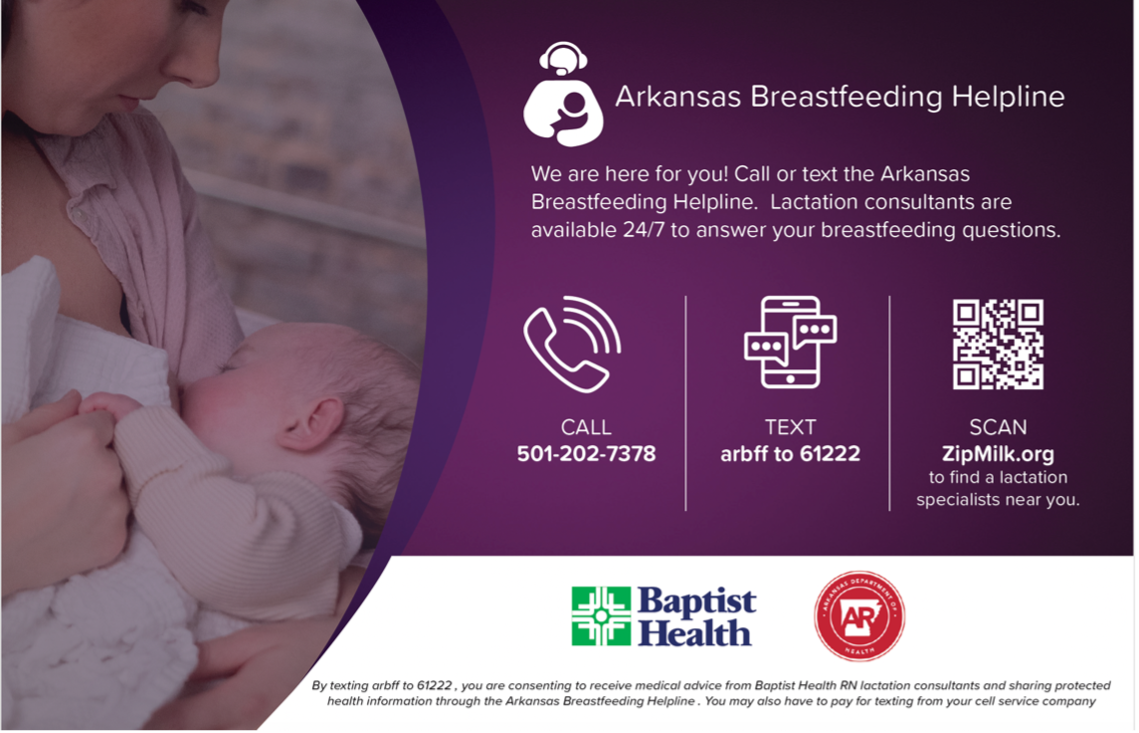
The Arkansas Breastfeeding Helpline plays an important role in expanding access alongside telelactation. Funded by the Arkansas Department of Health, the helpline is available 24 hours a day by phone or text. Parents can also scan a QR code on flyers throughout clinics that directs them to ZIPMilk.org, where they can enter their ZIP code to locate lactation consultants in their area.
ZIPMilk also allows lactation consultant providers around the state to add their listing so moms can find them. When a provider adds their listing, they can specify whether they provide telehealth services.
“When a mother calls the helpline, our staff can provide immediate counseling, connect her with telelactation services if needed, and help identify local resources, such as doulas, certified nurse midwives, and independent lactation consultants,” Jessica says.
What improvements or innovations could help new parents in the near future?
Looking ahead, improvements in electronic medical records and telehealth technology continue to make virtual care easier for providers and families.
“Many of the advances in telehealth were accelerated during the pandemic, when restrictions were lifted to allow greater flexibility in how visits were conducted virtually,” Jessica says. “Since then, platforms like Epic have made telehealth services, like telelactation, easier to integrate into routine care.”
While technology continues to improve access and convenience, breastfeeding remains a deeply personal experience. Telelactation is a valuable tool—especially for families facing transportation barriers—but it should complement, not replace, in-person care. Human connection and individualized support remain essential, and telelactation works best as part of a broader system of care that meets families where they are.
